For centuries, Bornheim was a village shaped by agriculture. An old road connection through the district linked the Queich Valley with Speyer and Landau. The proximity to the town of Landau had a lasting influence on trade and working life: markets, crafts, and later employment opportunities outside agriculture strengthened the economic foundation of the village.
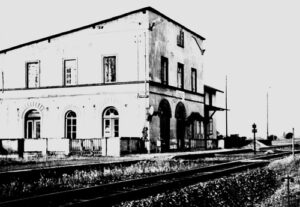 In the 19th century, the opening of the railway line brought new impulses. Goods, building materials, and fuels could be transported more easily; at the same time, many residents gained access to jobs in the region.
 In the 20th century, infrastructure changed fundamentally. Electrification, road construction, and later the introduction of a central sewage system significantly improved living conditions. From a village shaped by agriculture, the community gradually developed into a modern residential municipality.
A visible sign of this growth is the designation of new building areas since the second half of the 20th century. While the historic village center had grown over centuries, new residential streets were now created on the outskirts of the village. These expansions made it possible for young families to remain in the village or to move there. This led to the population reaching almost 1,600 inhabitants by 2025.
Historic building fabric, agricultural areas, and new residential districts now stand side by side and show the continuous development from a street village to a growing residential community.